Tree care in Norman
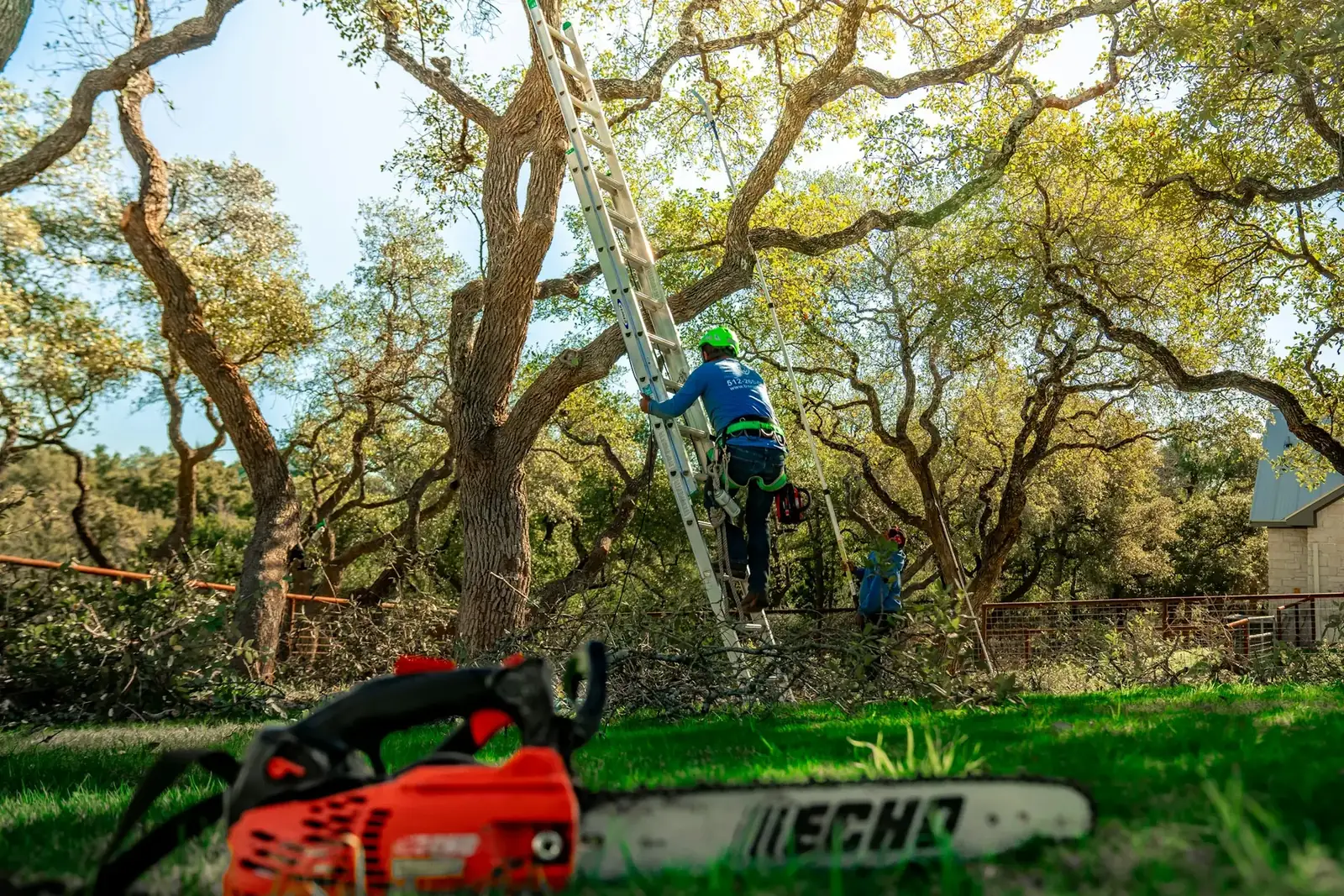
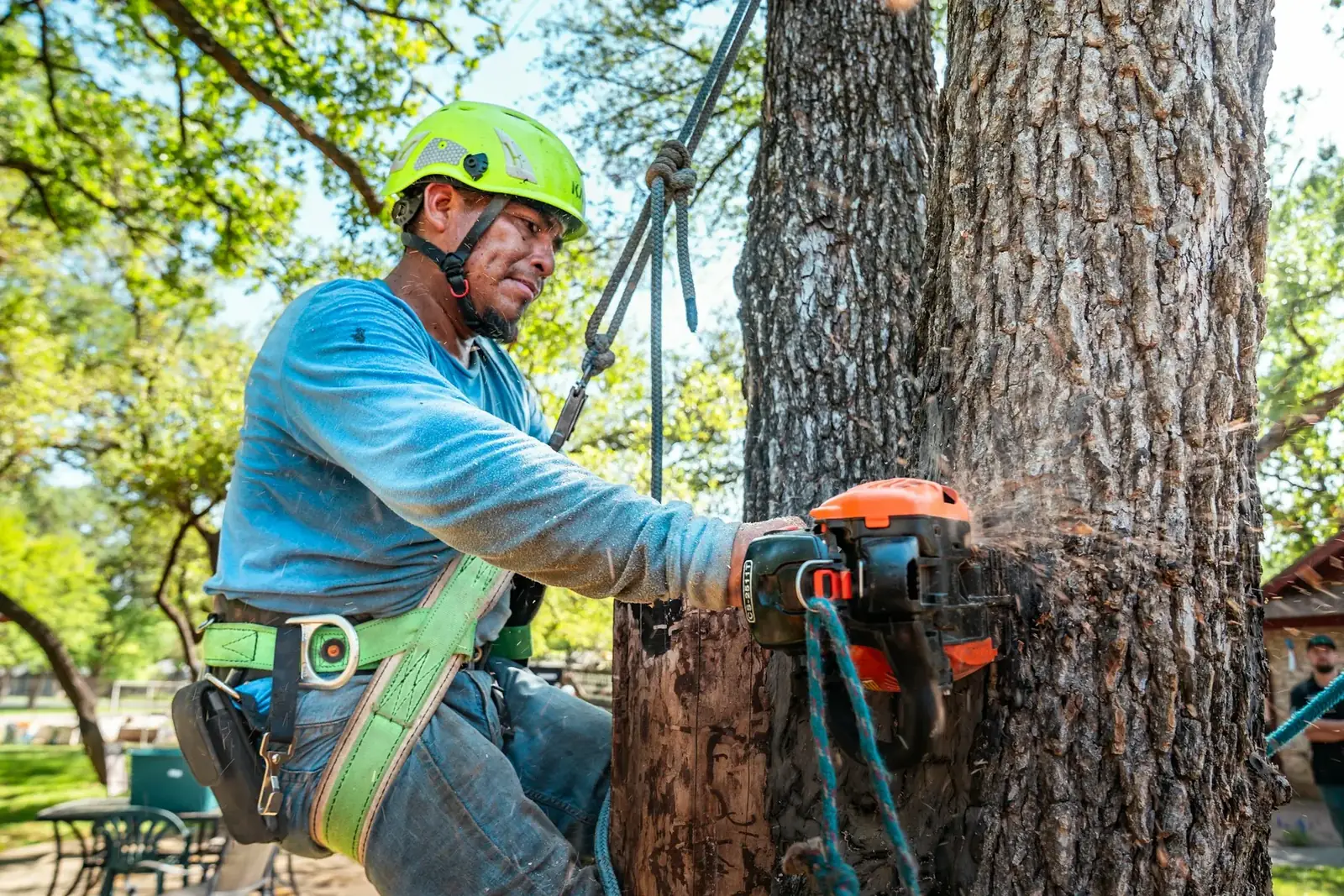
Norman's older streets, around the university area, Miller, and the neighborhoods that filled in through the mid-century, are lined with trees that have had decades to get large. Those are wonderful until a leader dies, a crotch splits, or a limb starts rubbing a roof. Taking one of those trees down, or taking the right parts out of it, is planned work: rigging, sectioning, and a clear idea of where every piece will go.
South and east Norman, and the acreage toward Lake Thunderbird and the county line, feels different. Lots are bigger, access can be a long drive or a soft field after rain, and trees often grew as fence rows, windbreaks, or volunteers along a creek. We quote those jobs after we understand access, overhead lines, and whether a stump needs to be ground or can be left below grade.
Cleveland County weather still does the rest. Ice, late-spring wind, and summer drought all show up in Norman canopies. Late winter remains the cleanest time to prune most species, and oaks are best handled in dormancy. If you're not sure whether a tree should come down or can be saved, that's a fair question to ask before anyone starts a saw.
Norman's older canopies and south-side acreage
In town you'll see large oaks, elms, pecans, hackberries, and the usual short-lived ornamentals that have overgrown a small lot. On acreage, post oak and blackjack mixed with eastern redcedar, plus cottonwood and elm along drainages, are common. Red clay and a wet spring can loosen a shallow-rooted tree; August drought then stresses the same tree from the other direction.