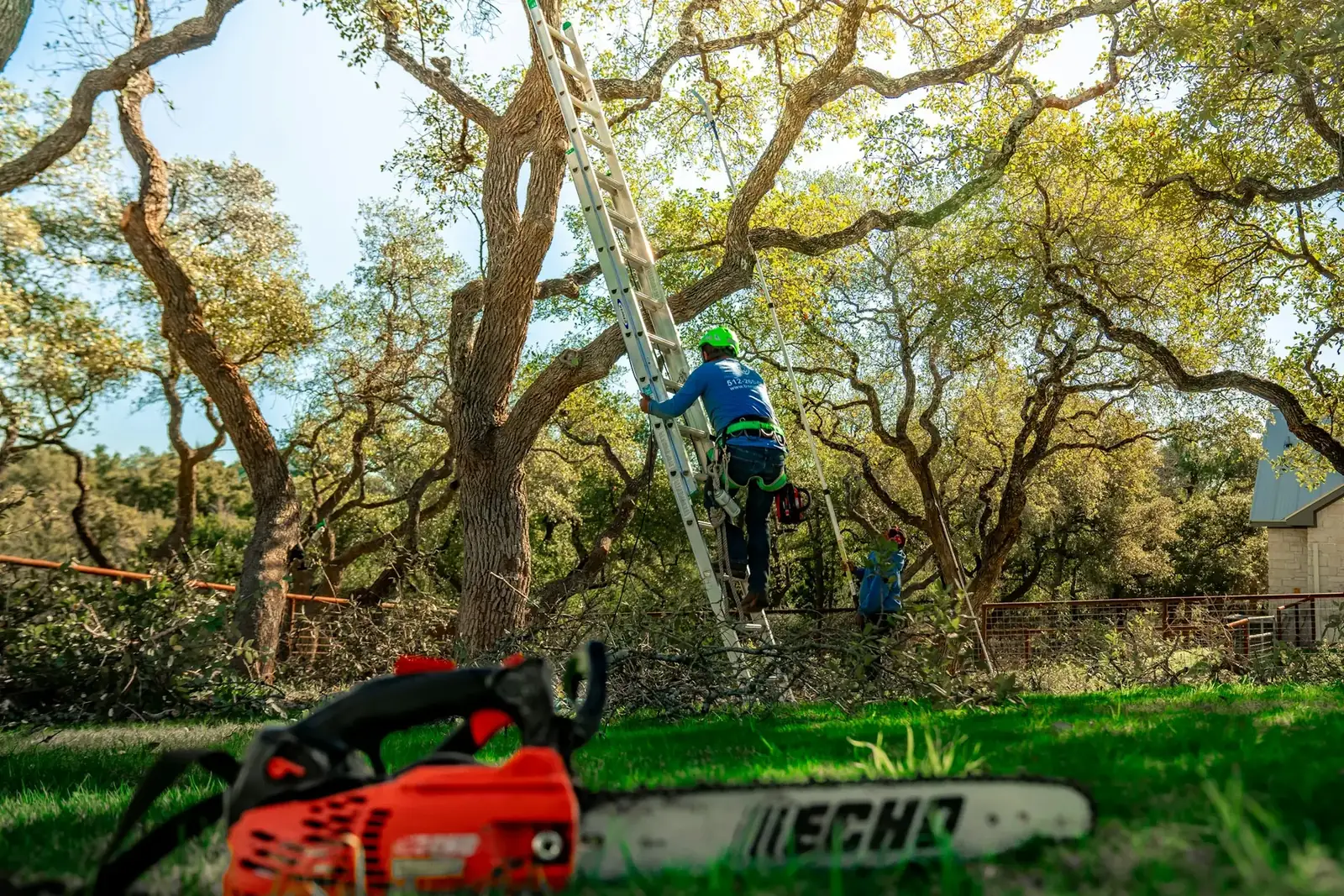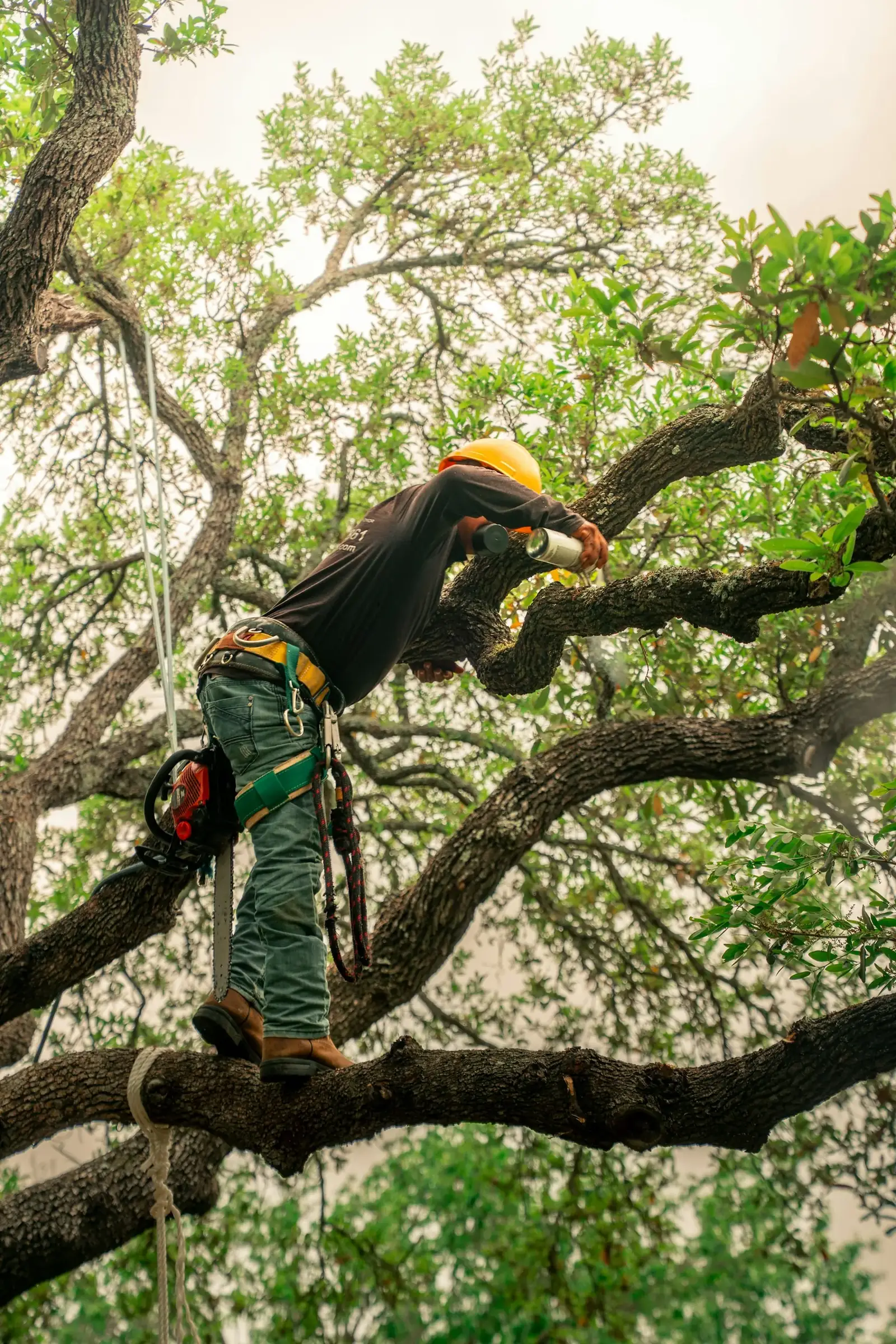
How we approach tree trimming
Most of the storm damage we see in Oklahoma City starts with structure: long, heavy limbs with nothing to support them, tight V-shaped unions that split under ice, and deadwood that lets go in the first strong gust. Thoughtful trimming fixes those weak points before the weather finds them.
We prune to industry best practices: clean cuts just outside the branch collar, no flush cuts, and never "topping," which weakens trees and causes a flush of fragile regrowth. The result is a canopy that lets wind pass through, lets light reach your lawn, and keeps branches off your roof and gutters.
Timing your pruning in Oklahoma
Late winter dormancy (December through February) is the sweet spot for most species here. You can see the tree's structure clearly and fresh cuts close fast in spring. For oaks, winter pruning matters even more: it reduces the risk of oak wilt, which spreads through fresh wounds in spring and early summer. Ahead of ice season, thinning heavy canopies on elms, maples, and Bradford pears is one of the best investments you can make.